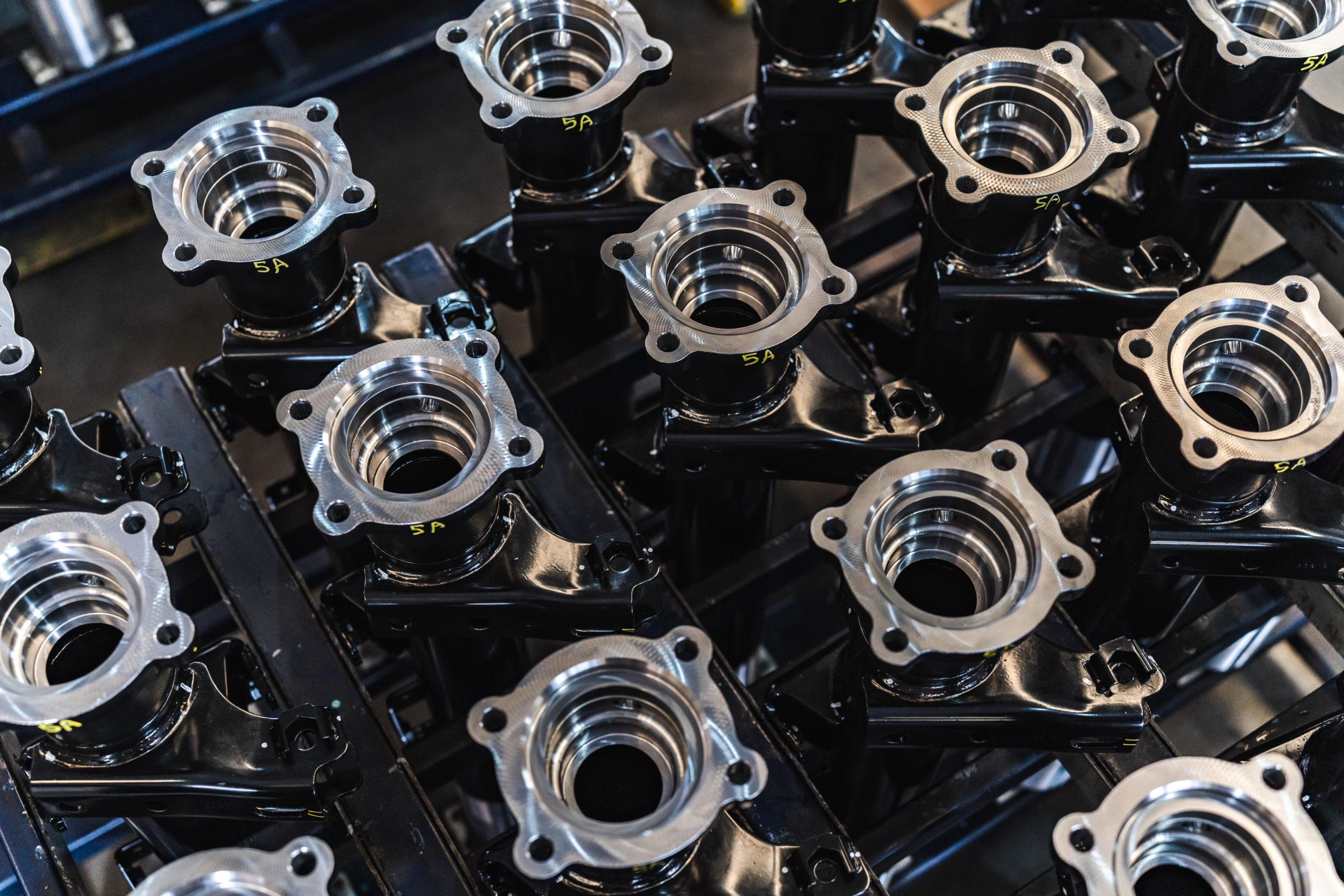
made of aluminum, steel, iron, bronze, brass and copper
+ 0 Materials
until delivery
< 0 Weeks
realized, 98% success rate
+ 0 Projects
Cast steel - material for extreme operating conditions
Cast steel is the material of choice when other materials reach their limits. Thanks to targeted alloying concepts and defined specifications for chemical elements, the material achieves strength properties that are far superior to those of cast iron or aluminum. Cast steel parts withstand impact stresses, high surface pressures and corrosive media. In the chemical industry they withstand aggressive acids, in mills and shredders they defy abrasive wear, in construction machinery they bear enormous loads at changing temperatures. The components also ensure structure and stability in safety-relevant applications in vehicle construction. For the most demanding applications, cast steel is therefore not just an option, but a must-have solution.
Castfast - Your platform for sophisticated cast steel procurement
Many manufacturers avoid steel casting projects with small batch sizes. The cost of shaping, melting and machining is high and the economic viability is unclear. Castfast solves precisely this problem: we bring together a network of specialized partners who can also reliably produce one-offs or cast steel parts in small batches. Your specifications are checked in parallel, processes and material systems are compared and matched with available capacities. You receive a reliable basis for decision-making – technically precise, economically sound and on schedule. This makes the procurement of cast parts transparent and controllable, even in complex projects.
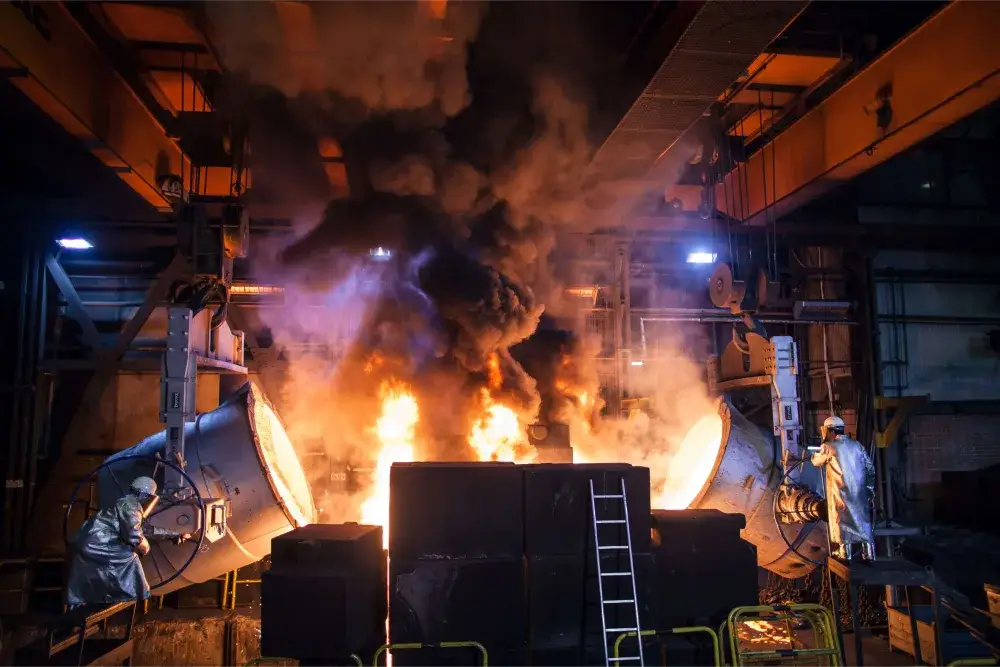
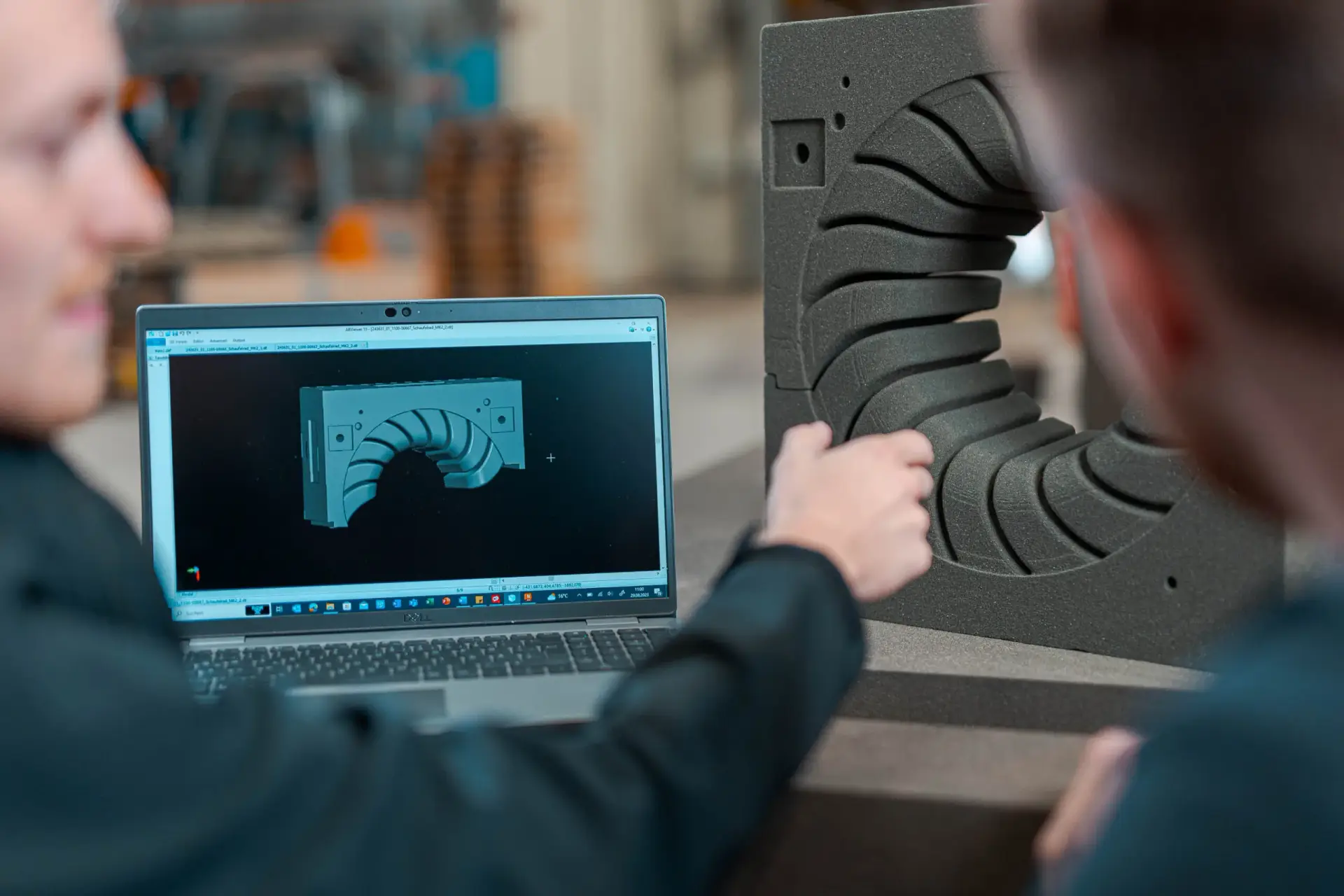
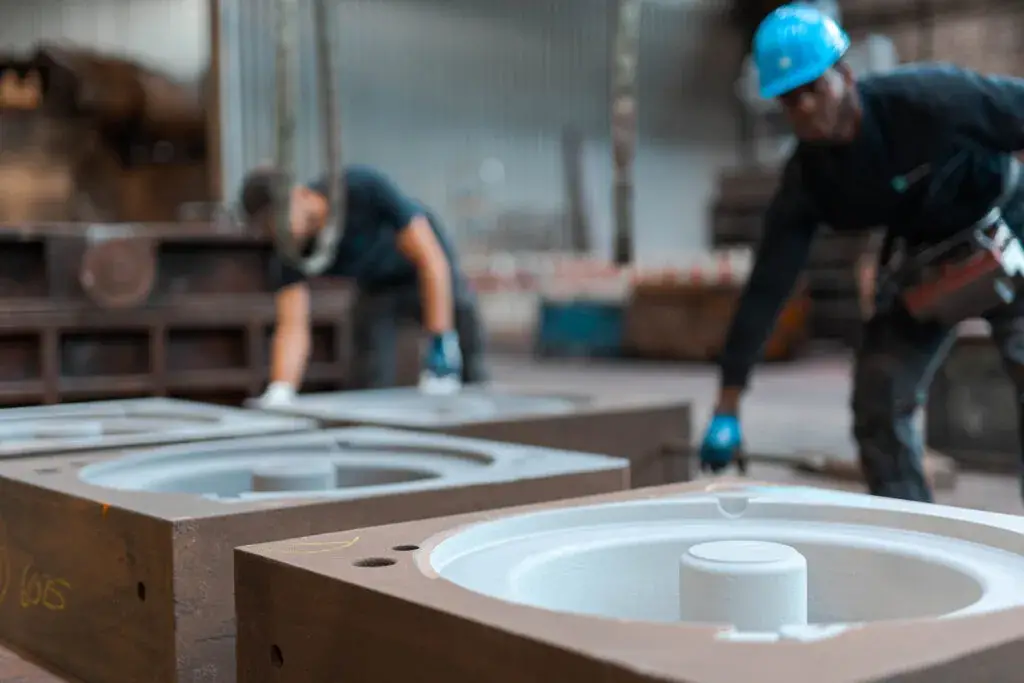
The production of cast steel parts is a sensitive process in which the process, shaping and choice of material must be precisely coordinated. Component sizes, geometry and specific functional requirements are decisive. Depending on the project situation, different processes can be considered. Examples include hand-mould casting, which allows maximum flexibility in mould design for individual parts or prototypes, machine mould casting, which ensures reproducible dimensional accuracy with defined tolerances for series parts, or gravity die casting, which enables complex components with high surface quality and tight dimensional specifications. In addition, all critical casting parameters are mapped using modern simulations – from the flow behavior of the melt and solidification kinetics to the design of riser and gating systems. This allows typical defects such as blowholes to be avoided at an early stage. The alloy is determined in parallel: In addition to carbon, chromium, nickel or molybdenum influence whether strength, corrosion resistance or toughness are in the foreground. Each melt is adjusted so that the resulting properties correspond exactly to the requirements – the basis for precision, safety and reliable quality.
Quality assurance and testing processes according to DIN EN
Cast steel requires strict testing concepts as it is used in safety-critical applications. Castfast works exclusively with manufacturers and suppliers who have implemented tests in accordance with DIN EN. These include spectral analysis to confirm chemical composition, non-destructive testing such as ultrasonic and magnetic particle methods, hardness and tensile tests to verify strength properties and documented acceptance procedures. This combination of tests and standard specifications guarantees products that not only fit in terms of design, but also function reliably in real-life operation.
The fields of application for cast steel parts are concentrated on high-load and safety applications that require the highest quality.
Chemical and plant engineering
Corrosion resistance to aggressive media, high resistance to casting temperature changes.
Construction machinery and shredders
Construction machinery and shredder systems: extreme wear resistance under varying impact loads.
Vehicle construction
Vehicle construction: load-bearing components that comply with safety standards and absorb crash-relevant loads.
In addition, old parts from the 1960s and 70s can be reproduced, for which companies often explicitly request steel as a material. During the consultation, Castfast checks whether a steel casting is really necessary or whether modern alternatives are more efficient for certain applications.
Network collaboration - flexibility for complex projects
Individual foundries quickly reach their capacity limits when it comes to steel casting. Castfast compensates for this by working together in a network: One foundry takes over the molds, a second the melting process and a third the machining. Bottlenecks can be compensated for by alternative suppliers. This creates a stable supply chain with a high degree of flexibility. For you, this means: secure production, predictable costs and reliable delivery – even for demanding projects.
Application example - Cast steel chain assembly
A customer needed a high-strength chain assembly that combined corrosion resistance and impact strength. Castfast distributed the production steps in a network: mold construction at one partner, melting at a second, final processing at a third. This meant that the project could be implemented more quickly and cost-effectively without compromising on quality. At the same time, we convinced the customer to switch to alternative materials for less critical components – an example of how technical experience and advice can save costs and resources.
Cast steel is durable but resource-intensive. Recycling rates are lower than for other castings, as scrap is often incompatible and new raw steel is required. Castfast meets this challenge through optimized manufacturing and production: precise mould design, reduced sprue quantities, simulations to minimize scrap. This reduces material consumption and energy use, while the quality of the products remains consistently high.
Process clarity from inquiry to delivery
Castfast follows a clearly structured process that guarantees planning security:
Consultation and qualification interview
Definition of requirements, drawings and deadlines.
Catalog of requirements
Definition of tolerances, machining allowances and acceptance procedures.
Technical coordination
Selection of the process, simulation of the shaping and melting process.
Order Tracking
transparent milestones, documented checks and process control.
Delivery
Acceptance according to DIN EN with complete certificates and verifications.
This process creates reliability, from the initial concept to the final delivery, and makes Castfast’s service comprehensible and measurable for customers.
Steel remains indispensable for applications at the load limit. At the same time, German manufacturers are under pressure: high energy costs, old structures and regulatory requirements are putting pressure on the situation. Suppliers in China work more cheaply and are more productive with modern systems. Castfast counters this environment with a hybrid approach: safety-critical components are produced by certified manufacturers in Germany, while standardized products are manufactured by international suppliers. This creates a robust supply chain that ensures quality and precision even in volatile markets.
Your direct access to steel castings
Whether prototype, small series or series – with Castfast you accelerate procurement. One inquiry is enough to reach several suppliers. We consolidate feedback, provide a clear basis for decision-making and ensure a delivery that is documented, precise and on time. You receive cast steel parts that meet the highest requirements – from material analysis to final acceptance.