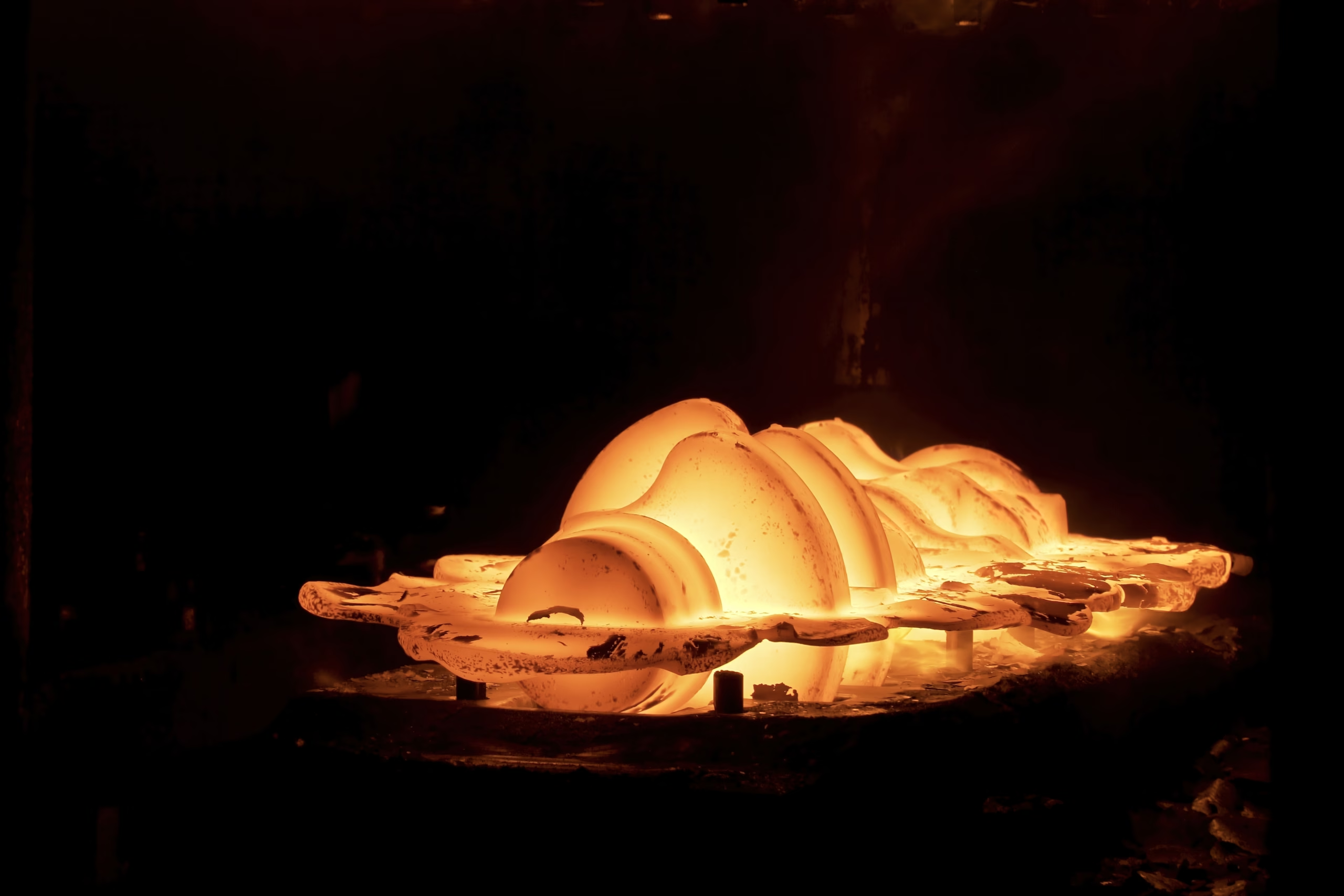
Gray cast iron, technically known as lamellar graphite cast iron (GJL), is one of the most commonly used materials in mechanical engineering. Its popularity stems from physical characteristics that make it the material of choice for load-bearing and damping components. In modern manufacturing, this material is often underestimated, yet it offers advantages that steel or aluminum can hardly match. Those who understand the material structure and behavior of gray cast iron can build durable and cost-effective components.
Procuring gray cast iron in small quantities is often difficult for companies. Many foundries can only operate profitably when producing large quantities. Castfast solves this problem through a network specializing in the precise execution of gray iron projects. Whether a prototype or a small production run is needed, this approach ensures the right manufacturing solution.
Are you planning a project involving gray cast iron? Upload your design data to Castfast and receive a quote for manufacturing using the appropriate casting process.
The difference from other types of cast iron lies in the form of the carbon. In gray cast iron, the carbon precipitates in fine lamellae during solidification. These lamellae run through the microstructure like a network. The fracture surface appears gray due to the high graphite content, which gives the material its name.
This structure determines the material’s properties. While the lamellae reduce tensile strength compared to steel, they improve compressive strength and machinability. During milling or drilling, the graphite acts as a built-in lubricant. This protects the tools and produces short chips, which makes machining on CNC machines easier. As a result, gray cast iron can be easily machined into complex final shapes.

One characteristic of gray cast iron is its ability to absorb mechanical vibrations. The graphite flakes convert motion into heat. In mechanical engineering, this ensures the precision of machinery. Machine beds made of gray cast iron prevent vibrations from the motors from being transmitted to the workpiece. A bed made of welded steel would have to be reinforced at great expense to achieve similar performance.
In addition, gray cast iron is a good conductor of heat. In components subject to thermal stress, such as engine housings or brake rotors, the material quickly dissipates heat away from the source. This reduces stress in the material and extends its service life. The shape remains stable even under fluctuating temperatures. That is why gray cast iron is the standard for housings in which bearing seats must fit precisely.
Typical Applications for Gray Cast Iron
Housings for gearboxes and pumps with high structural rigidity.
Vibration-isolation frames for machine tools.
Brake discs and drums for heat dissipation.
Cylinder blocks and cylinder heads in engine manufacturing.
Base plates and mounts for heavy-duty equipment.
These applications demonstrate that gray cast iron is a sensible choice when stability and smooth operation are more important than tensile strength alone. By selecting the appropriate GJL grade—such as EN-GJL-150, EN-GJL-200, EN-GJL-250, or EN-GJL-300 —hardness and strength can be precisely tailored to the specific load.
One advantage of gray cast iron is its low melting point and good fluidity. The molten metal reliably fills delicate molds and complex cores. This allows for components with internal channels or thin ribs that, using other processes, could only be produced by expensive milling from solid material. Replacing steel structures with castings often saves on assembly steps and material costs.
The energy required to melt gray cast iron is lower than that required for steel casting. This reduces costs and improves the energy balance of the components. Gray cast iron really shines in 3D sand printing, as the molten metal harmonizes perfectly with the digitally generated sand molds.
Reduced weight thanks to thinner wall thicknesses in complex shapes.
Ready-to-install features such as cooling channels cast directly into the part.
Replacing expensive welded assemblies with one-piece cast housings.
Faster processes in mechanical finishing.
High level of safety thanks to standardized material properties in accordance with DIN EN 1561.
These theoretical principles are put into practice through a network of specialized foundries. The quality assurance department inspects the microstructure to ensure that the damping properties of graphite are present in every component.

People often wonder whether gray cast iron or ductile iron (GJS) is the better choice. In ductile iron, the carbon is present in a spherical form, which makes the material tougher. However, lamellar gray cast iron remains unmatched in terms of damping. If you expect high tensile forces, choose GJS. If you need a quiet machine and good heat dissipation, use GJL.
Machining gray cast iron is less expensive. Because the lamellae promote chip breaking, higher cutting speeds are possible on the machine. When considering the total cost, including CNC machining, gray cast iron is often more cost-effective if the structural requirements allow it.
Design engineers are often faced with a decision: Should a component be manufactured as a welded steel structure or as a GJL casting? Both materials have their merits, but each excels in different areas. While steel excels in terms of extreme load-bearing capacity, gray cast iron demonstrates its strengths in complex geometries and under vibration-intensive loads.
| Property | Gray cast iron (GJL) | Steel / Cast Steel |
|---|---|---|
| Vibration Damping | Very high (graphite lamellae dampen vibrations) | Low (vibrations are transmitted) |
| Tensile strength | Moderate | Very high |
| Geometric Complexity | Excellent (integrated channels, thin ribs) | Limited (high labor costs due to welding/milling) |
| Machinability | Excellent (graphite acts as a lubricant, short chips) | More labor-intensive (longer chips, greater tool wear) |
| Thermal conductivity | Very good (fast and even heat dissipation) | Moderate |
| Production Costs (Mass Production) | Cost-effective (lower melting point, pre-formed contours) | Often higher (many steps involved in welded assemblies) |
Steel is indispensable when components must withstand extreme tensile forces or impacts and the weight must remain low while maintaining maximum strength. Cast iron, on the other hand, is the more economical and technically superior solution when dimensional stability, smooth operation, and complex internal geometry (such as in engine or pump housings) are the primary considerations.
Castfast fulfills GJL orders through a network of partner foundries. Gray iron accounts for 60% of the portfolio, making it the largest component. The process begins with uploading the CAD data to the platform. The team checks the geometry for compliance with foundry requirements. This prevents defects such as cracks or stresses that can occur as gray iron cools.
We deliver gray cast iron components ready for installation. This includes casting and machining on CNC machines. Castfast ensures delivery through its network. If one facility loses capacity, another partner with the same technical equipment takes over production. Quality assurance monitors compliance with GJL material standards throughout the process.
Optimize your components with the technical advantages of gray cast iron. Castfast offers quick access to experts and manufacturing facilities for high-quality cast components.
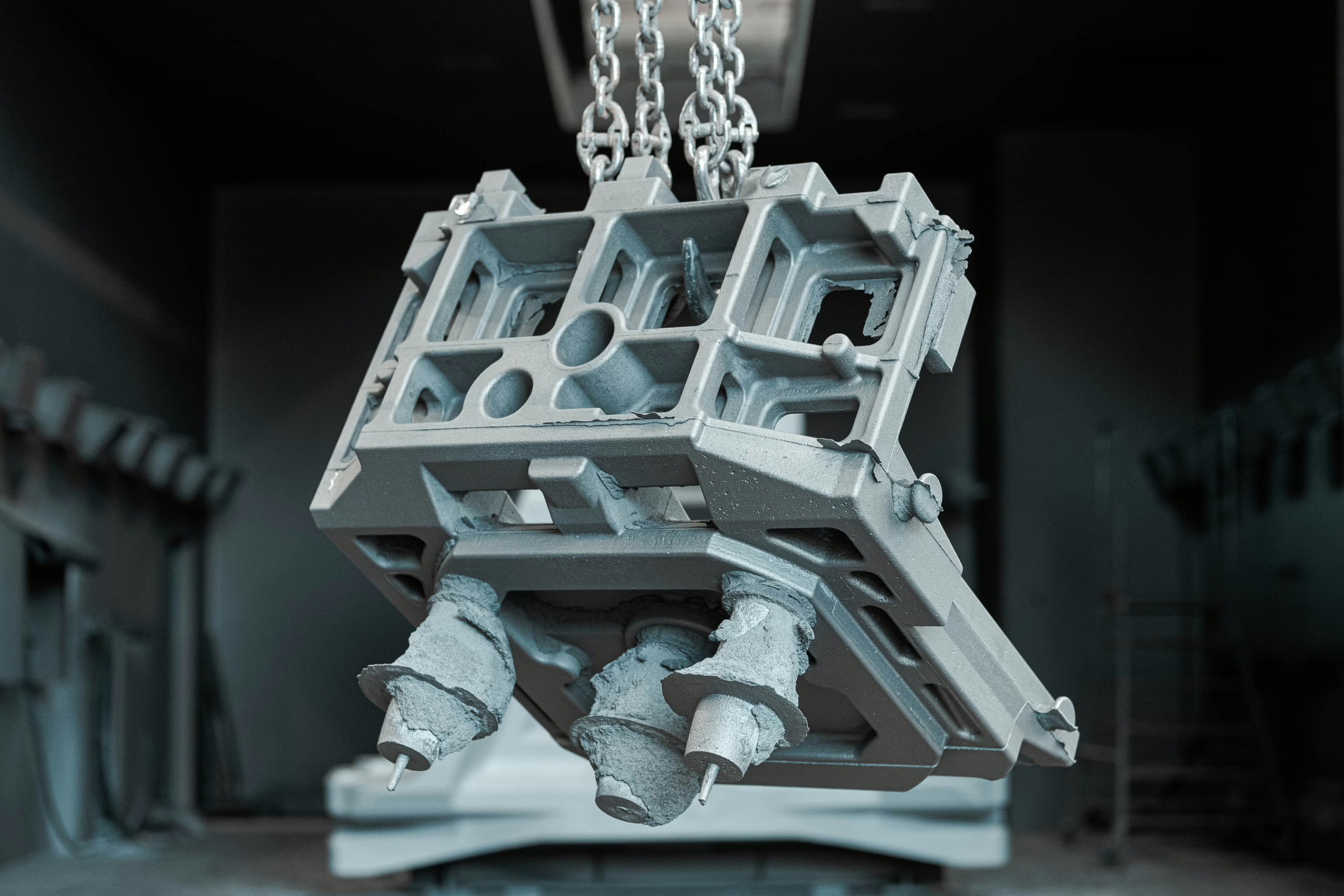
The graphite flakes act as small buffers within the material. They interrupt the direct path of the vibrations and convert them into heat through friction. Steel has a uniform microstructure that transmits vibrations almost unimpeded. That is why gray cast iron is the standard material for machine beds.
Gray cast iron is very easy to machine. The graphite breaks the chips into short pieces while also lubricating the tools. This allows for fast machining with minimal wear on milling cutters and drills. Compared to tough steel or sticky aluminum, gray cast iron remains dimensionally stable and is efficient to machine.
Welding gray cast iron is difficult and not commonly used in standard manufacturing processes. Due to its high carbon content, cracks or hardened areas often form in the heat-affected zone. Special procedures exist for repairs, but from a design perspective, gray cast iron components should be designed as cast-only parts. Joints are usually made using bolts.
The shape of the graphite flakes determines how quickly the material cools. In thin walls, gray cast iron cools more quickly, resulting in a finer and harder microstructure. In very thick parts, it cools slowly; the lamellae become larger, and the strength decreases slightly. Uniform wall thicknesses are therefore important for a stable component.
In addition to good castability, thermal conductivity is crucial. Gray cast iron dissipates heat faster than steel. In housings or brake discs, this prevents localized overheating and deformation. The heat is distributed evenly, which protects the components from thermal damage.



